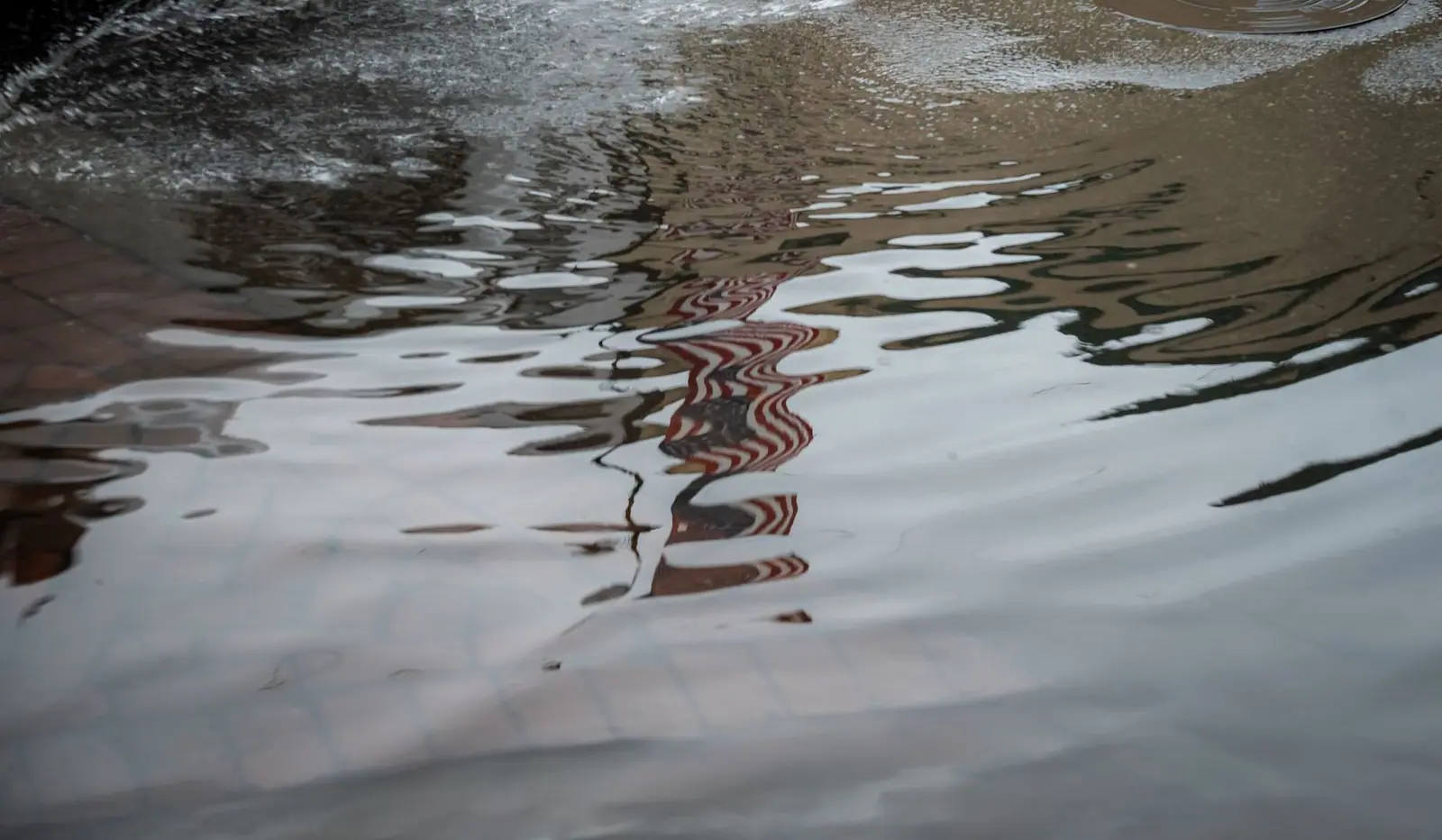
Flood Damage Cleanup Flood water is not just water.
Storm, street or ground: it carries what it crossed, so the cleanup goes well past drying.
It crossed the street before it got to you.
A broken pipe starts out clean, and flood water never gets that chance.
It comes over lawns, down driveways and stairwells, or up through the ground itself.
On the way it picks up whatever it crossed: yard chemicals, street runoff, sewer overflow.
The trade’s S500 standard puts flood water from rivers or the ground in Category 3.
Category 3 means grossly contaminated, the same class as sewage backflow.
Treat street water and storm water the same way until someone knows better.
So wet carpet, pad and drywall get a harder look here than after a clean leak.
Drying alone leaves the dirt where the water left it.
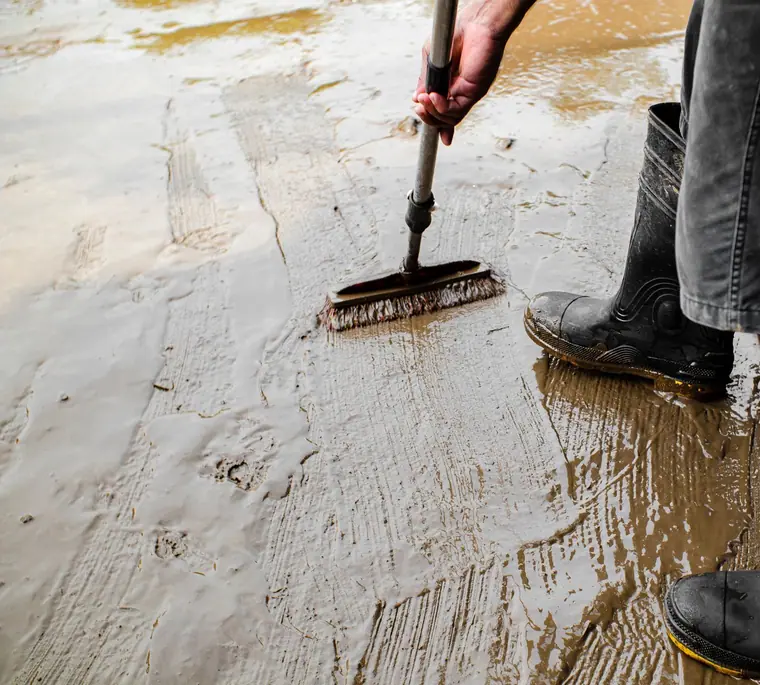
The marks a flood leaves on a house.
- 01
A line on the wall
It shows how high the water stood, and drywall can stay wet well above it.
- 02
Silt in the corners
Fine mud settles where a mop misses, and it holds what the water was carrying.
- 03
Water with no storm behind it
A wet slab days after the rain points to the ground, not the sky.
- 04
Paneling that feels spongy
Panels and insulation can look fine from the room and stay soaked behind.
Safe first, then clean, then dry.
- 1
Call from dry ground
(888) 929-0245. Tell us how deep it is, where it came in and whether the power is on.
- 2
Pump and extract
Pumps and extractors take the water, then the silt and soaked material go with it.
- 3
Clean what stays
Hard surfaces get cleaned and sanitized, so the dirt does not dry in place.
- 4
Then dry it
Drying gear runs until the readings settle and match the dry parts of the house.

The street is draining, and your basement is not.
Some water comes from below.
A storm is the obvious cause, but it is not the only one.
Some basements take on groundwater for years, with or without rain.
Storms come on top of that.
Tell us when it started and how often it comes back.
Fantastic job! Best of the best! I could never have prayed for better service, better quality of work, everything is a Class Act! All of this while providing the friendliest service you could hope to find. I cannot praise them enough.
On this one, people ask.
The water is still coming in. What do I do?
Get out of the basement and stay out.
Stay out of standing water if outlets, appliances or the panel may be wet.
If you smell gas, leave and call the gas utility or 911.
Report street flooding to your city or town so they can check the main.
Does my homeowners policy pay for a flood?
Only your policy can answer that, so read it or ask your agent.
FEMA says standard homeowners policies generally do not cover flood damage.
Flood coverage is a separate policy, so check yours.
It is groundwater, not a storm. Can you help?
Yes, call us about the cleanup and the drying.
Cleaning a basement does not stop the ground from sending more water.
Ask us how that is handled on your house, and what to expect if it comes back.
Other water damage we take on.
- Basement Water DamageThe floor drain, the laundry corner, the rec room carpet.
- Water Damage RestorationThe whole wet house: walls, ceilings, floors and what sits behind them.
- Broken Pipes Water DamageSplit supply lines, freezing nights, water through the ceiling.
- Sewage Backup CleanupThe dirtiest water damage: drain backups cleared, cleaned, sanitized.
Tell Roddy what happened.
Call if water is still moving.
Otherwise send the short version here, and we will call you back.
A photo by text helps if you have one.